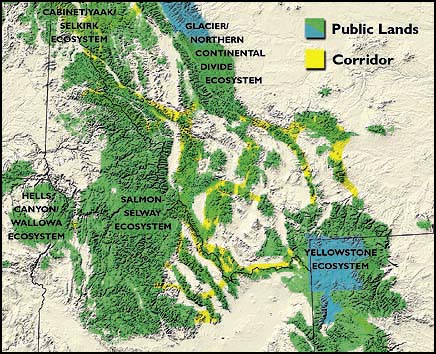
The Northern Rocky Mountain Bioregion (Figure 4) consists of parts of Montana, Wyoming, Idaho, Oregon, and Washington, and is the last great expanse of native biodiversity in the contiguous United States. This ecosystem still contains all of the species present during the time of the Lewis and Clark expedition, now more than 200 years ago (Wild Rockies Action Fund 2005a). This "bioregion" is the last stronghold for Gray wolves, Woodland caribou, Bull trout, Grizzly bears, and many others. Over time, these animals have developed instinctual movements and migrations from one core area to another in order to ensure genetic diversity, as well as to obtain crucial resources and establish territories. A connected ecosystem consisting of core areas linked by biological connecting corridors is essential to ensure the future health and longevity of the entire region.
Figure 4. Map of the Northern Rocky Mountain Bioregion (Wild Rockies Action Fund 2005a)
The majority of these lands are already protected under the National Park Service, US Forest Service, Bureau of Land Management, or under various state agencies. More than 20 million acres in between and around, however, still remain unprotected and are becoming increasingly vulnerable to destruction by road-building, logging, mining, and commercial, residential, and industrial development. These modern impoundments fragment valuable habitat and interrupt crucial corridors of migration and movement. As the landscape is changed by modern human alterations, it is very hard for species to adapt and change routes that have been so finely tuned over the years by evolution. When interacting populations are broken up and isolated, the chance of species survival is drastically diminished. Ecological science has showed that the chance of survival in large populations is much greater, and that habitat fragmentation decreases genetic diversity due to increased inbreeding, and leaves subpopulations more vulnerable to disease, natural phenomena, etc...
This site will focus on three indicator, or umbrella species. Umbrella species are defined as species that are wide-ranging, slow-breeding, highly sensitive to habitat degradation, and serve as indicators of ecosystem health and integrity (Wild Rockies Action Fund 2005b). The three indicator species chosen for the Northern Rocky Mountain Bioregion are the Grizzly bear, the Bull trout, and the Gray wolf. All three species are native to the area, and all three species are either listed as threatened or endangered under the Endangered Species Act of 1973 (USFWS 2006). Grizzly bears and Gray wolves are both essential terrestrial indicators, and Bull trout are important indicators of aquatic ecosystem health. By studying these three species, the goal is to gain an understanding of the entire ecosystem through its umbrella species, and the impacts of habitat fragmentation and interruption on the Northern Rocky Mountain Bioregion.
Ursus arctos
Grizzlies are a wide ranging species and may cover thousands of miles throughout the course of a lifetime. A typical home range is anywhere between 10-380 square miles. In the wild, a typical lifespan can be anywhere from 15-34 years. Today, less than 1,200 grizzlies exist in the American Northern Rocky Mountains, a population reduced to about 1% of their original range (North American Bear Center 2005). This number is very low compared to a population of about 25,000 in Canada, and approximately 32,000 grizzlies in Alaska (Figure 6). To ensure the long-term viability of grizzlies in the Northern Rockies, a population of approximately 2,000 bears at a density of 1 bear every 25 square miles would be necessary (Conservation Biology 1996). At this density, 50,000 square miles of land would be required to sustain a grizzly population. No one core area in the region is this large, but if linked and managed wisely, an interconnected habitat matrix can be established that is large enough to support a stable, self-sustaining population.
In the early 1800's, an estimated 50,000 grizzlies once roamed the western United States (National Wildlife Federation 2006). At this point in time, grouped with other large predators like wolves and mountain lions, grizzlies were seen as a threat to humans and livestock. Today Grizzlies are often seen as symbols of American wilderness, but in the times of the early western settlers, wilderness was viewed as a hindrance to modern development and an obstacle to "the American Dream." In pursuit of the American dream, the western forests were vastly exploited and cut, and grizzlies were hunted, trapped, and poisoned almost to extinction. Bounties were placed on the heads of large predators, and grizzlies all but vanished throughout the American mountain west.

Figure 5. Alaskan Grizzly (North American Bear Center 2005)
As time passed and lives changed, so did the country's views towards wild places and wilderness. Americans began to realize the intrinsic value of our wild lands and the creatures that inhabited them. In 1973, the Endangered Species Act was introduced by the U.S. Fish and Wildlife Service, and Grizzly bears were afforded federal protection. Plans to reintroduce bears to native ranges started developing all over the region, the most popular of which was in the nations first national park; Yellowstone. Today, Yellowstone National Park boasts the largest grizzly population in the contiguous Unites States, at somewhere between 500-600 bears (National Wildlife Federation 2006). Currently, in the Selway-Bitterroot ecosystem of Northern Idaho and Western Montana, a reintroduction plan is on hold from a "No Action" ruling by the Department of the Interior.
The Selway-Bitterroot ecosystem is the largest suitable grizzly habitat remaining in the lower 48, at approximately 3.7 million acres. The proposed reintroduction area is already almost entirely federally designated wilderness, and is also historic native grizzly range. The plan proposed to introduce five bears each year for five years. Being an umbrella species, this plan would not only provide adequate area for grizzly populations to thrive, but would also protect habitat for 71% of the mammal species, 67% of the bird species, and 61 % of amphibians native to Idaho (Conservation Biology 1996). The U.S. Fish and Wildlife Service conducted similar studies on five different areas in the Northern Rocky Mountains and concluded that the Selway-Bitterroot ecosystem would be most suitable for a grizzly reintroduction zone, but sadly, the USFWS ruling was overruled by a "No Action" ruling by the Department of Interior.
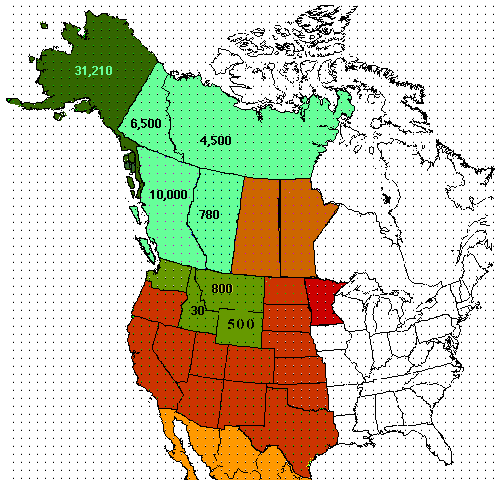
Figure 6. North American Grizzly Populations (Craighead Environemntal Research Center 2005)
If a stable grizzly population can ever be established in the lower 48 United States, now is the time to take the necessary steps. The Northern Rocky Mountain Bioregion presents the last opportunity of suitable habitat in the contiguous U.S., and because of the close proximity to strong Canadian populations, this ecosystem is absolutely ideal. Furthermore, the vast majority of proposed land is already protected. Grizzly populations need to be reestablished in necessary core areas such as the Selway-Bitterroot ecosystem, and connecting corridors must be established to not only link core areas in the United States, but also to link weak U.S. populations with strong populations in the Canadian Rockies.
"A Rocky Mountain without a grizzly on it is only half a mountain, commonplace and tame."
-William T. Hornaday 1913 (National Wildlife Federation 2006)
Canis lupus
The Gray Wolf is the largest wild canid found anywhere on the planet, with an average height of 66-81cm, and weights that can exceed 150 lbs. In the wild, wolves have been found to live up to 13 years, although the average lifespan is only five to six years. As one of the worlds most wide-ranging land animals, wolves can occupy a wide variety of habitats ranging from arctic tundra to arid deserts and virtually everywhere in between. Daily distances traveled can be up to 200 km per day, and pack territories can range from 130-13,000 square kilometers. Historically, wolves were the world's most widely distributed mammal (Gray Wolf 1999), but today, they are struggling to survive on less than 10% of their native ranges.
As top predators, wolves play an important role in their ecosystems by controlling natural prey populations and removing weak individuals. Currently, Alaska alone has a wolf population between 6,000-8,000, and Canada maintains a thriving population near 50,000. Sadly, the current wolf population in the lower 48 United States is about 2,600, with nearly 2,000 of those isolated in Minnesota (Animal Diversity Web 2006). Without question, the main cause of population declines has been habitat destruction and intense persecution by humans.
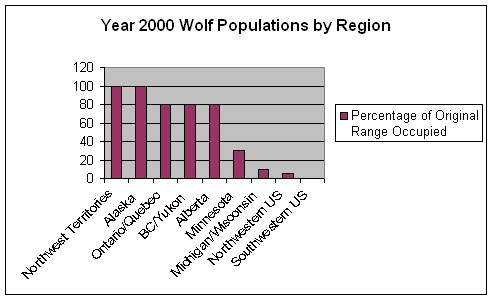
Figure 7. Graph Showing Percentage of Original Range Occupied by Wolves in Year 2000 (Gray Wolf 2000)
Throughout history, wolves around the world were viewed as symbols of fear and evil that lurked in the wilderness. In folklore throughout the world, the "big, bad, wolf" emerged as the dominant wolf imagery, and wolves barely survived the wrath of humans throughout the 19th and 20th centuries. In actuality, wolves are very elusive animals with extremely keen senses, and hardly ever come in close contact with humans. In North America, wolf extirpation began around the same time as ranching began amongst American settlers. Wolves were a threat to livestock and seen as a serious threat to life in the "New World." States began placing bounties on the heads of wolves in the early 1800's, and it is estimated that around 100,000 wolves were killed in the United States between the years of 1870 - 1877 alone (IWC 2006). By 1913, the extermination efforts had become so intense that the state of Wyoming actually enacted a penalty of $300 to anyone who freed a wolf caught in a trap (IWC 2006). The 1960s are considered to be the extreme low point for U.S. wolves. Only an estimated 350-600 were still hanging on in Minnesota, and about 20 in Isle Royal, Michigan, and by the early 1970s, biologists found no evidence of a wolf population in the entire Greater Yellowstone Ecosystem (NPS 2002).
The mid 1970s marked a turning point for wolves of the lower 48 United States. The Endangered Species Act was put into place in 1973, and in 1974, wolves were granted federal protection (USFWS 2006). Talk of wolf reintroduction efforts began to spring up around the U.S., especially in the mountain West. In 1987, the Northern Rocky Mountain Wolf Recovery Plan was completed by the USFWS, and was approved by Congress in 1991. National Park Service policy calls for restoring native species when sufficient habitat exists to support a self-perpetuating population, management can prevent serious threats to outside interests, the restored species most nearly resembles the extirpated species, and that extirpation resulted from human activities (NPS 2002). In this case, all of the criteria were met and Yellowstone NP was chosen as the site for the first wolf reintroduction program. Thus far, the program has been somewhat successful, and Yellowstone maintains a relatively strong, but isolated population. Wolves, however, are still listed as endangered throughout their entire historic range except for in Minnesota, where they are threatened.

Figure 8. Sawtooth National Wilderness Area, Idaho (Photo Credit: Kyle Coshow 2006)
Today, the silhouettes of wolves appear as icons of wilderness, on T-shirts, posters, and bumper stickers around the country. The spirit of the wolf represents something that our society has lost touch with in this current time of hand-held computers, electric cars, and space-age technology. The wolf represents everything wild, and the spirit of freedom that accompanies the spirit of wilderness. The wolf is wilderness and wilderness is the wolf. Although most people hope never to experience a close encounter with a wolf, it comforts them to know that places still exist wild enough for wolves to thrive and wander as they please. Like grizzly bears, if wolves are to survive on their own in the lower 48 United States, strong subpopulations must be connected throughout the Northern Rocky Mountains, and linked with much stronger Canadian populations. The land and the opportunities exist to ensure the longevity of the Gray wolf, and in doing so, to protect the spirit of the wilderness for Americans to enjoy for generations to come.
"We humans fear the beast within the wolf because do not understand the beast within ourselves."
Gerald Hausman (The Wolf Gallery 1997)
Salvelinus confluentus
Bull trout can measure 30-70 cm in length and can exceed weights of 30 lbs. They can be identified by their large heads and by the absence of black spots on their dorsal fins. Bull trout are usually olive green to brown on the back and white on the belly. These increasingly rare fish are important indicators of aquatic ecosystem health because they can live up to 20 years, and are limited to clean, sediment-free, groundwater-fed streams. Any alteration that causes erosion, increases silt, or changes in flow or temperature affects the number of trout that will hatch and their ability to survive to maturity (Rasmussen 2002). River health is often indicative of the health of surrounding forests, and for this reason, bull trout not only play a large role in aquatic ecosystems, but in the surrounding terrestrial ecosystems as well.
From the 1930s to the mid 1950s, the extirpation of large Bull trout from streams and rivers was seen as an acceptable practice because Bull trout were often viewed as unwanted predators that fed on more savored trout species. The irony behind this is that most of the fish considered more important were often non-native and introduced by man to improve the local sport fishing of an area. At this time it was believed that the removal of Bull trout would improve the survival of other fish. This was partly true, but as a result, Bull trout numbers began to decline rapidly and steadily. As time went on, over-fishing, habitat destruction, and a misunderstanding of the role of Bull trout in the ecosystem almost led to the total extinction of the trout in the lower 48 United States. Figure 10 illustrates the historic range of Bull trout in the Northwest vs. the current Bull trout range. The number of clean, sediment-free, groundwater-fed streams necessary for spawning were dropping continuously, and as a result, the annual cohorts of Bull trout declined consistently.
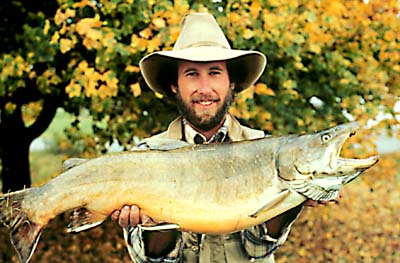
Figure 9. Bull Trout (Alliance for the Wild Rockies 2002b)
It was not until the end of the 20th century that wildlife and land managers began to really understand the role of this lost species in its native ecosystems. In November of 1999, the Bull trout was listed as a threatened species in the contiguous United States under the Endangered Species Act (ESA). A threatened species is defined as one that is considered likely to become endangered within the foreseeable future (USFWS 2006). Today, most anglers are unaware of the vulnerable state of Bull trout populations, and very often have trouble distinguishing them from other trout species. When combined with irresponsible land/resource use and ignorant decision-making, this lack of knowledge has kept Bull trout populations restricted to low numbers throughout their original range.
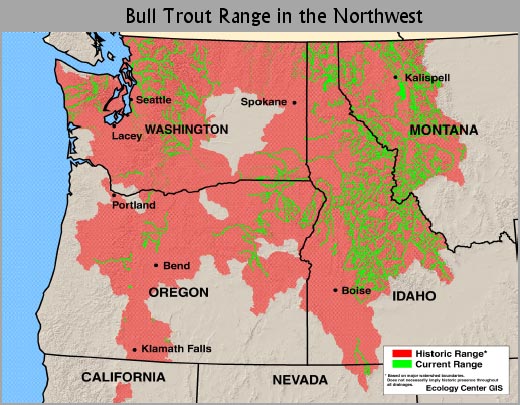
Figure 10. Bull trout habitat (Alliance for the Wild Rockies 2002a)
Rivers and streams are the lifelines of any ecosystem. Inland water ways move water and vital nutrients around throughout the ecosystem, and supply water for all of the Earth's organisms. In this way, the health of an ecosystem is largely dependant on the health and continuity of its rivers and streams. For these reasons, Bull trout must be examined very carefully because the health of their habitat carries a great responsibility for the health of an entire region under their umbrella. By protecting and connecting Bull trout habitat, the Grizzly bear, the Gray wolf, and nearly all of the marine and terrestrial organisms within the Northern Rocky Mountain bioregion will be protected as well.
"The rivers and streams are the veins of the universe. They're your lifeline, take care of them."
Marcellus Williams "Bear Heart" (Williams 1996)
The time to take action is now. Large, core areas of suitable habitat still exist, and although fragmented, these core areas provide the basis for a linked ecosystem spanning from southern Wyoming, through Idaho and Montana, and all the way up along the spine of the Canadian Rocky Mountains to the terminus in Alaska. Many core areas exist, but only as islands of safety separated by barriers to movement. The survival of this irreplaceable ecosystem and all of the species within it is almost entirely dependent on the establishment of connecting pathways of movement known as biological corridors.
Most of the protected areas in the mountain West are areas of high, rugged, scenic landscapes, but usually exclude prime forest and riparian habitat at mid elevations and in valleys. More often than not, these lower areas contain the most crucial habitat pathways for local species survival. Biological corridors are defined as segments of critical land that link one core area to another (American Wildlands 2005). Corridors can be ribbons of land or uninterrupted rivers, and can function at several levels. They can allow seasonal movements of species, such as elk migrations between summer and winter ranges. They can provide dispersal routes for territorial species, like adolescent cougars that must find and establish their own territories. Corridors can also function over longer periods of time. For instance, solitary animals like grizzly bears and moose often spend their entire lives roaming, and can often end their life hundreds of miles from their place of birth (Wild Rockies Action Fund 2005a).
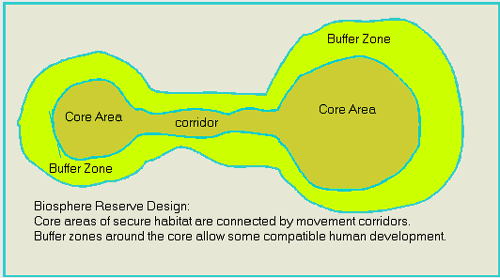
Figure 11. Core areas and linkage corridor (American Wildlands 2005)
The idea of biological corridors goes hand-in-hand with the concept of buffer zones. Around the established core areas and corridors, buffer zones must be established to surround protected habitat with areas where regulations are not as tight as in core areas, but still provide a transitional zone (Figure 11). Buffer zones are crucial because animals do not understand boundary lines and often wander outside protected areas, usually resulting in death. Buffer zones act as zones of transition that are necessary in developing a more gradual boundary. These transition zones would allow increased resource exploitation and recreation opportunities, while at the same time maintaining the natural integrity of the region (American Wildlands 2005).
Aside from the obvious biological benefits, establishing and protecting habitats and corridors present many social and economic benefits as well. Thousands of good paying, domestic jobs will be created to restore damaged habitat and manage resources and lands, and wildland conservation also decreases American taxpayer support to subsidize corporate logging and mining operations on public lands. In the West, where water issues are of particular importance, watershed health will be protected and dams and impoundments will be strongly discouraged. Last but certainly not least, the establishment of this ecosystem reserve will perpetually protect the overall economic base of the entire region - natural resources, clean water, wildlife, fish, recreation, land management jobs, and a skyrocketing tourism industry.
"What is preserved in a wilderness area is not individual trees or organisms but the complex web of relationships between them."
Fritjof Capra (1982)
The current administration under President George Bush Jr. has, and continues to make unwise, irresponsible decisions in regards to the environment and resource conservation/use. Many experts even say that the Bush administration has the worst environmental record of any administration in our history. As Americans, it is hard not to believe this claim when newspapers, magazines, and newscasts are constantly littered with talk about more lenient environmental regulations coming from the federal government. Today, the battle rages on regarding the proposal by the administration to open up the Arctic National Wildlife Refuge (ANWR), a vital area to the entire native biodiversity of Alaska, to drilling and oil exploration. Countless geological surveys have shown that the amount of recoverable petroleum under ANWR would only be enough to sustain current U.S. oil demand for a maximum of six months, but the current administration feels that a six-month supply of oil is worth the permanent destruction of one the nations most biologically important ecosystems.
In July of 2004, the Bush administration announced a plan to overturn the Roadless Area Conservation Rule in pursuit of continued resource exploitation. The Roadless Area Conservation Rule (RACR) was enacted in 2001 to protect 58.5 million acres of roadless National Forest lands. Under the new Bush plan, these roadless areas are no longer under federal protection, and governors must now petition the federal government to protect roadless areas in their states. This petition process and litigation that it entails are sure to inconvenience and discourage individual states from pursuing roadless-area protection in their states. The U.S. National Forest system is already littered with 386,000 miles of roads - enough to circle the Earth 15 times (The Wilderness Society 2004). This new proposal claims to improve local economies by providing jobs in the extractive industries such as mining, logging, and oil exploration, but according to the U.S. Department of Commerce, recreation and conservation related employment is about six times as large as jobs in the extractive industries within the Rocky Mountain Region, and USDA predictions in 1999 estimated that our National Forests provide four recreation/conservation based jobs for every one job related to resource extraction (The Wilderness Society 2004)
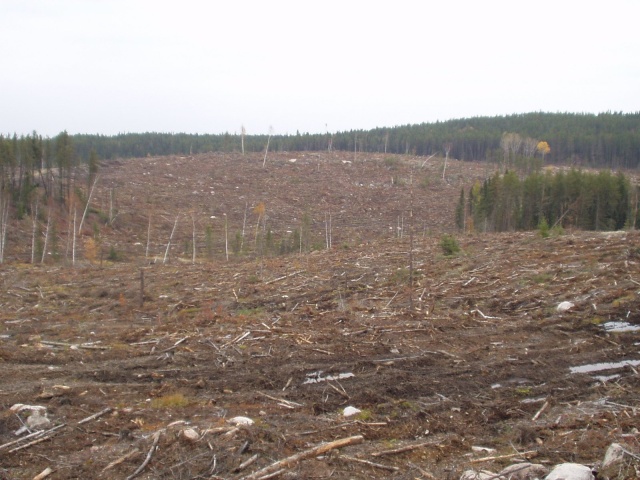
Figure 12. Clear-cut forests (Christian Peacemaker Teams 2005)
In November of 2005, the administration announced a new plan that will revoke Endangered Species Act (ESA) protection for grizzly bears in and around Yellowstone National Park. The new proposal would allow hunting of the bears, and open protected habitat on U.S. National Forest Service lands to large-scale real estate, logging, and energy development. These new regulations would both accelerate the loss of grizzly habitat and increase the likelihood of bear/human conflicts. Scientists repeatedly warn that removing federal protections is the wrong thing to do at this time if interested in maintaining a healthy, long-term grizzly population (Earth Justice 2006). Under the new proposal, grizzly management outside the borders of Yellowstone National Park would be turned over from the National Forest Service to the surrounding states of Wyoming, Montana, and Idaho. All three of these states already have hunting plans for grizzlies in place anticipating a federal delisting from the Endangered Species Act.
In Portland, Oregon 2005, a federal judge rejected a proposal from the Bush administration allowing ranchers to shoot wolves on sight if attacking livestock. The ruling was that the administration violated the Endangered Species Act (ESA) when it relaxed protections on many of the nations gray wolves. The judge further ruled that the federal government acted improperly by combining areas where wolves were doing well, such as Montana, with areas with small, struggling populations (Common Dreams 2005). By doing so, the current administration intentionally mislead the public to believe that wolf populations throughout the Mountain West are much stronger than they actually are in a attempt to further blindly exploit the region.
Under the current Bush administration, it seems nearly impossible to make any progress in the sectors of environmental conservation and natural resource protection without getting tied up in litigation, or being overruled all together. Until we have an administration that recognizes both the inherent and economic values of the conservation of wild places, environmental concerns will continue to take a back seat to "more important" issues like increased resource exploitation and unnecessary defense spending. As Americans, we must realize that the National Parks, National Forests, and National Wildlife Refuges, belong to all the people of the nation, and not to individual states or the federal government. Americans spend millions of dollars in taxes to protect these so-called "public" lands when much of our tax money is ironically being spent to subsidize corporate logging, mining, and oil operations that undermine the very purpose of the national land-management systems.
"God has cared for these trees, saved them from drought, disease, avalanches, and a thousand tempests and floods...but he cannot save them from fools."
John Muir (Sierra Club 2006)
Secretary of the Interior: Gale Norton
United States Department of the Interior
1849 C Street, N.W. Washington DC 20240
E Mail: webteam@ios.doi.gov